1. The Legend of Lady Godiva
 |
| Credit: Wikipedia.org |
When her husband issued a heavy tax on the local people, Lad Godiva begged him to stop this oppressive tax, called a 'Heregeld'. According to the legend, Godiva's Husband retorted that he would only stop the tax if she rode through the centre of Coventry naked.
So she did, shielding herself only with her hair. Later stories of the legend case that Lady Godiva sent messengers through the city beforehand, warning the townspeople to stay inside and shut their windows during this scene.
'The Peeping Tom'
Lady Godiva was so highly respected that the entire city shut down their windows while she rode through it naked. the only exception was a tailor, who watched through a hole in his hutter as the naked woman roamed the city. Legend says he was struck blind for not obeying Lady Dogdiva's request. The tailor, who was allegedly named Tom, thus originated the term 'Peeping Tom'.
Godiva's husband also abolished the law immediately after her protest.
Historical Information
Lady Godiva, or Godhifu, was the wife of Leofric, Earl of Mercia. She was born around 980 and died between 1066 and 1086. Godiva was mentioned by the 12th-century chronicler Florence of Worcester, but there is no evidence connecting her famous naked rider of Coventry.
2. The Legend of Robin Hood
(This one may be the most popular one because it is famous and movies are made about it.)
 |
| Credit: Wikipedia |
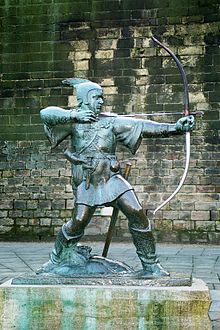
The legendary Robin Hood was known to be enemies with the Sheriff of Nottingham, and later ballads paired him with a companion, Maid Marian. It is believed he had a group of men working for him whom he called his 'Merry Men'.
Historical Information
The historical figure behind the legend of Robin Hood remains a mystery, but scholars have several theories:
- Robert Hod was an outlaw who failed to appear in court in the summer of 1225. Royal Judges in York failed to par the ordered penalty and his name appeared as 'Robbehod' in the following year's ledger.
- William Robehod was another outlaw mentioned in court records from 1261.
3. The Legend of the Fountain of Youth
 |
| Credit: Wikipedia |
Historical Basis
The Legend of the Fountain of Youth tells about a special fountain that contains water with special powers. It is believed that by drinking this water, a person gains eternal youth. Nobody knows where this fountain is. American Legends claim that it is somewhere in Florida, while European legend claims it is in Spain.
Whispers of bodies of water with special powers granting eternal youth have been circulating the world for millennia (a period of a thousand years). The story of the Fountain of Youth itself, however, is connected to the Spanish explorer Juan Ponce De Leon, who, the legend say, struck out in search of it.
In truth, experts say that de Leon had no intention of searching for the Fountain of Youth and merely sought to gain wealth by discovering new lands. The story of the Fountain of Youth originate from the Arabic land of the Middle East and has been recycled over the centuries throughout many different cultures, legend and literature.
4. The Legend of Atlantis
 |
| Credit: Mysterious Earth |
(This one is probably one of the most popular ones as it was the one to be talked about.)
Historical Analysis
It is believed that about 9,600 years ago there was an island called Atlantis. The Ancient Greeks called this place a holy city and believed that it used to lie beyond the Pillars of Hercules. The island was said to have sunk because it was defeated by Athens.
The logical explanation of the matter, however, is that the island sunk due to submarine convulsions or volcanic eruption. The location of Atlantis is alternatively given as somewhere in the Mediterranean Sea or the Atlantic Ocean. According to much research, however, there was never any such island. The matter has been under debate for centuries, as some still believe that the island did exist.
Plato's Atlantis
The story of Atlantis was originally told by Plato in 360 B.C. 9,000 year before his time, Atlantis stood as a great island populated by technologically advanced and prosperous people. The island was swept away after being defeated by Athens.
Aristotle later said that Plato's tale of Atlantis was meant to serve as a metaphor to serve his narrative and that it was entirely fictional. however, others have taken Plato's story literally and there have been many hypotheses about the potential location of Atlantis.
Scientists generally concur that there is no evidence Atlantis ever existed but there are countless theories about it, including that the island was swallowed up by the Bermuda Triangle. Some believed that Atlantis was a metaphorical retelling of the story of the Minoans, who were believed to be Europe's first great civilization more than 4,000 years ago.
5.The Legend of Bloody Mary
Bloody Mary is one of the most popular ghosts in the world. But who was she, really? No one actually knows. There are hundreds of legends about this famous legendary character.
 |
| Credit: All that is interesting |
Some say she was a widow who killed her children, while some say she was a young child who was murdered and is wandering around her grave. Other tales say the ghost is Mary Worth, a woman said to be a witch who was burned at the stake. Other tales also say she killed the young woman and took their blood, drank it so she could turn young. (I have heard of this and it has worked)
One legend about Bloody Mary says that if a person says 'Bloody Mary' three times in front of the mirror after midnight, Mary's ghost will appear and kill them. Some legends also portray her as a good ghost, but she is most often seen as an evil spirit.
Bloody Mary Ritual
The most important aspect of the legend to Bloody mar is not the story of Mary herself but the ritual of summoning her. Folklorists have written about Bloody Mary Rituals in American culture since the 1980s, describing them as seance-like events that usually involved candles, mirrors, and chanting an incantation to summon Bloody Mary. It is uncertain whether the legend derives from the myth or vice versa.
6. The Legend of El Dorado
Early European expeditions in South America were driven in part by the search for gold. The legend of El Dorado originated in modern-day Colombia and was first mentioned in writing By Gonzalo Fernandez de Oviedo in 1541, who referred to 'El Hombre Dorado', a mythical tribal chief who covered his body in gold dust daily. Over time, the lake became a city of gold, then, an entire province.
The legend evolved over the centuries, with others claiming that this mythical chief dipped his body in the lake (Thought to be Lake Guatavita in Colombia) every day due to the ample supply of gold in his 'kingdom', fueling explorers desire for further gold-seeking expeditions in search of the mysterious "El Dorado".
Whispers of another possible location for El Dorado mentioned the mysterious city Manoa on the shore of the mythological Lake Parime. In reality, any 'El Dorado' in existence had been conquered prior to Columbus arrival in the new world in 1492. Indian memory and legend led to the centuries-long (search for El Dorado), the final of which was in 1775.
7. The Legend of King Arthur
(King Arthur is probably one of the best legends as it tells people a great lesson.)
King Arthur was a legendary British character thought to have existed during medieval times and is believed to have led the defence of Britain against the Saxon invaders during the early 6th century. Many theories about his identity have been proposed by the scholars over the centuries, while others say he never existed. The legends surrounding King Arthur varied greatly over the centuries.
The legend goes that Arthur was conceived by Uther Pendragon who, with the assistance of the wizard Merlin, had used magic to deceive his enemy's wife, who he later married. A young Arthur succeeded his father to the throne, Excalibur in hand and married Guinevere. 12th-century texts include tales of the chivalrous Knights of the Round Table and their adventures. Later French texts indicate that one of Arthur's most beloved knights, Lancelot, was the Queen Guinevere's lover.
Mordred was another well-known character in Arthurian legend. He is commonly believed to be Arthur's illegitimate son with Morgaine, his half-sister. After being dealt a fatal blow by Mordred, Arthur was taken to Avalon, where he died.
Avalon was a mystical island, which is said to be where Glastonbury is located now. Monks at Glastonbury Abbey claimed to have found the bones of Arthur and Guinevere in the 12th century.
Who was King Arthur?
Very little is known about the Dark Ages when King Arthur was said to have won numerous battles against the Saxons. Over the centuries, the tale of Arthur has expanded and remained timeless. but experts haven't been able to confirm that he actually existed. The first mention of Arthur was in a 9th-century text written by a Welsch historian who said Arthur was a warrior king and winner of 12 battles.
It wasn't until the 12th century that King Arthur emerged as we know him today in History of the Kings of Britain by Geoffrey of Monmouth. Queen Guinevere, Sir Lancelot, and the wizard Merlin emerged as key figures in the legend of King Arthur, and further renditions of the tale.
8. The Legend of the Gordian Knot
Gordian was an ancient Phrygian who, according to a prophecy, would become the king of Phrygia. The prophecy foretold that the first man to enter the city with a cart would be the new king. When Gordian entered the city with his cart and became, he tied his cart to a tree using a special and complex knot.
It was then prophesized that the first man to undo the knot would be the new king. IN 333 B.C, Alexander the Great entered the city. After failing to untie the knot, he sliced it down the middle with his sword and became the new king.
The Gordian Knot Metaphor
Because of Alexander's unconventional methods, 'cutting the Gordian knot' has now become a metaphor for thinking outside the box when solving a complex or unsolvable problem. The solution used when solving one of these problems is called the 'Alexandrian Method'.
9. The Legend of Yamashita's Treasure
The legend of Yamashita's treasure, or Yamashita's gold, is new compared to most of the other legends discussed in this article. According to the legend, during World War ll the Japanese General Tomoyuki Yamashita hid treasure in caves and other underground locations throughout the Phillippines. The treasure was actually stolen loot, consisting of gold items including bars and some antiques.
In 2017, diver allegedly found blocks of gold booby-trapped in an underwater cave. Some hypothesize that this is the missing treasure, but many anthropologists believed that whispers of the hidden loot were only rumours.
10. The Legend of Prester John
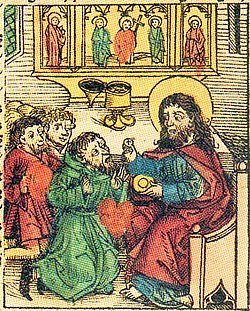
Prester John is believed to have been a king who ruled a nation somewhere in Europe during 12th-13th centuries. According to the legend, he was a righteous man who led a great wealthy kingdom. His kingdom also consisted of magical objects and creatures. However, somehow his kingdom disappeared. Although today many people call it a mythical story, it was believed for many centuries. and inspired adventures to hunt for the lost kingdom and treasure.
Who was Prester John?
Prester John was thought to have ruled in either the Far East or Ethiopia as a Christian priest and king. The German chronicler Otto of Freising first wrote of him in the 12th century.
Well, everyone, I hope you have enjoyed reading this, and I hope you learned something. Have a great day!
One legend about Bloody Mary says that if a person says 'Bloody Mary' three times in front of the mirror after midnight, Mary's ghost will appear and kill them. Some legends also portray her as a good ghost, but she is most often seen as an evil spirit.
Bloody Mary Ritual
The most important aspect of the legend to Bloody mar is not the story of Mary herself but the ritual of summoning her. Folklorists have written about Bloody Mary Rituals in American culture since the 1980s, describing them as seance-like events that usually involved candles, mirrors, and chanting an incantation to summon Bloody Mary. It is uncertain whether the legend derives from the myth or vice versa.
6. The Legend of El Dorado
 |
| Credit: BBC |
The legend evolved over the centuries, with others claiming that this mythical chief dipped his body in the lake (Thought to be Lake Guatavita in Colombia) every day due to the ample supply of gold in his 'kingdom', fueling explorers desire for further gold-seeking expeditions in search of the mysterious "El Dorado".
Whispers of another possible location for El Dorado mentioned the mysterious city Manoa on the shore of the mythological Lake Parime. In reality, any 'El Dorado' in existence had been conquered prior to Columbus arrival in the new world in 1492. Indian memory and legend led to the centuries-long (search for El Dorado), the final of which was in 1775.
7. The Legend of King Arthur
 |
| Credit: Exemplore.com King Arthur in combat |
King Arthur was a legendary British character thought to have existed during medieval times and is believed to have led the defence of Britain against the Saxon invaders during the early 6th century. Many theories about his identity have been proposed by the scholars over the centuries, while others say he never existed. The legends surrounding King Arthur varied greatly over the centuries.
The legend goes that Arthur was conceived by Uther Pendragon who, with the assistance of the wizard Merlin, had used magic to deceive his enemy's wife, who he later married. A young Arthur succeeded his father to the throne, Excalibur in hand and married Guinevere. 12th-century texts include tales of the chivalrous Knights of the Round Table and their adventures. Later French texts indicate that one of Arthur's most beloved knights, Lancelot, was the Queen Guinevere's lover.
Mordred was another well-known character in Arthurian legend. He is commonly believed to be Arthur's illegitimate son with Morgaine, his half-sister. After being dealt a fatal blow by Mordred, Arthur was taken to Avalon, where he died.
Avalon was a mystical island, which is said to be where Glastonbury is located now. Monks at Glastonbury Abbey claimed to have found the bones of Arthur and Guinevere in the 12th century.
Who was King Arthur?
Very little is known about the Dark Ages when King Arthur was said to have won numerous battles against the Saxons. Over the centuries, the tale of Arthur has expanded and remained timeless. but experts haven't been able to confirm that he actually existed. The first mention of Arthur was in a 9th-century text written by a Welsch historian who said Arthur was a warrior king and winner of 12 battles.
It wasn't until the 12th century that King Arthur emerged as we know him today in History of the Kings of Britain by Geoffrey of Monmouth. Queen Guinevere, Sir Lancelot, and the wizard Merlin emerged as key figures in the legend of King Arthur, and further renditions of the tale.
8. The Legend of the Gordian Knot
 |
| Credit: www.history.com |
It was then prophesized that the first man to undo the knot would be the new king. IN 333 B.C, Alexander the Great entered the city. After failing to untie the knot, he sliced it down the middle with his sword and became the new king.
The Gordian Knot Metaphor
 |
| Credit: Wikipedia |
9. The Legend of Yamashita's Treasure
The legend of Yamashita's treasure, or Yamashita's gold, is new compared to most of the other legends discussed in this article. According to the legend, during World War ll the Japanese General Tomoyuki Yamashita hid treasure in caves and other underground locations throughout the Phillippines. The treasure was actually stolen loot, consisting of gold items including bars and some antiques.
In 2017, diver allegedly found blocks of gold booby-trapped in an underwater cave. Some hypothesize that this is the missing treasure, but many anthropologists believed that whispers of the hidden loot were only rumours.
10. The Legend of Prester John
 |
| Credit: Wikipedia |
Who was Prester John?
Prester John was thought to have ruled in either the Far East or Ethiopia as a Christian priest and king. The German chronicler Otto of Freising first wrote of him in the 12th century.
Well, everyone, I hope you have enjoyed reading this, and I hope you learned something. Have a great day!