Pages

Friday, May 17, 2019

Home Chemistry: Crazy Crystals (Pt 2)

Findings

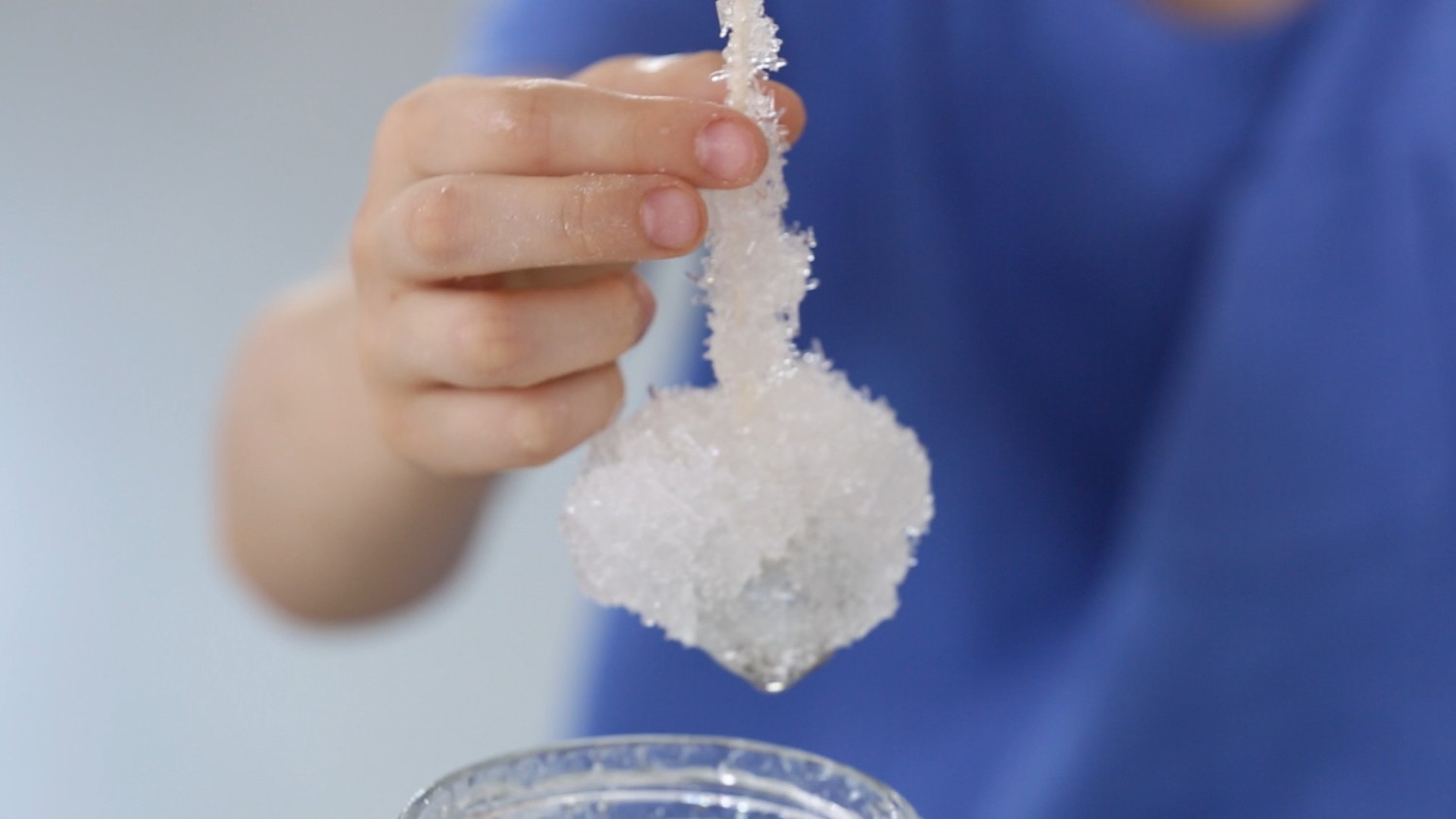
Describe your crystals in the table below.


Crystal Type
Shape
(Describe the shape)
Size
(of individual crystals)
Hardness
(Crumbly to Rock Hard)
Borax
Image result for borax crystals

Square: CubeMedium Hard
Sugar
Image result for sugar crystals


Circle, Cube Medium Hard 
Salt
Image result for salt crystals

Cube and Circle Large Rock Hard 

What crystals worked out best and why?:

Conclusion:

_

How is salt formed
How is sugar formed
Image result for salt crystalHow are snowflakes made 


Explain how the following crystals are formed:


Type
Explanation
Salt
Image result for salt crystal

Saltwater flows onto a lake/pond where the water would eventually evaporate and then it would come up as pure brine. After that crystals will be made and the lake/pond will be drained 

Sugar
Image result for sugarcrystal

Sugar can be made in two different ways one way is using sugar cane and another way is using sugar beets. To make sugar people wait for the sugar to grow until they are ready to be harvested, then they cut off the tops. After harvesting and transporting to a mill, the sugar cane is wash and cut into shreds. After that huge rollers crush the cane really hard, then the mixture goes down to a machine which separates the fibres and juices are separated. Then the juices go to another machine to be evaporated, then they are put in a huge pot to be crystallized. To get crystals from the mixture, you need to add sugar crystals just a sprinkle is enough o kickstart the process. From there it is moved into a machine where a centripetal would force out the remaining liquid. Leaving you with dry sugar crystals, then it will be purified, decolourized, recrystallized and dried in a large granulator. Lastly, they are run through a variety of screen where they would be sized, also to removed any impurities and to make the sugar crystals the right size and colour. 

Snowflakes
Image result for snowflake crystal
A snowflake forms when an extremely cold water droplet freezes onto a pollen or a particle in the sky, then it would grow and grow until it hits the ground.


CRYSTAL TYPES


AIM: TO LOOK AT THE 7 DIFFERENT TYPES OF CRYSTALS


Image result for salt crystal image
Salt Crystals

Image result for sugar crystal image
Sugar Crystals

Image result for borax crystal image
Borax Crystals


7 different crystal shapes


The 7 types of crystals


Type
Number of sides
2 examples
Image
Triclinic

7

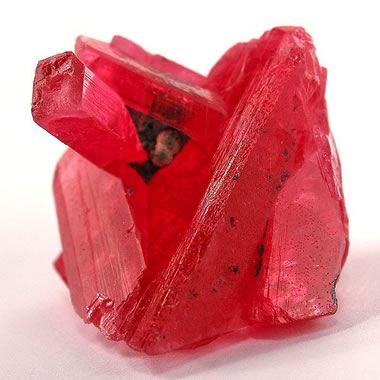
Turquoise Rhodonite

Image result for rhodonite
Monoclinic


6Azurite
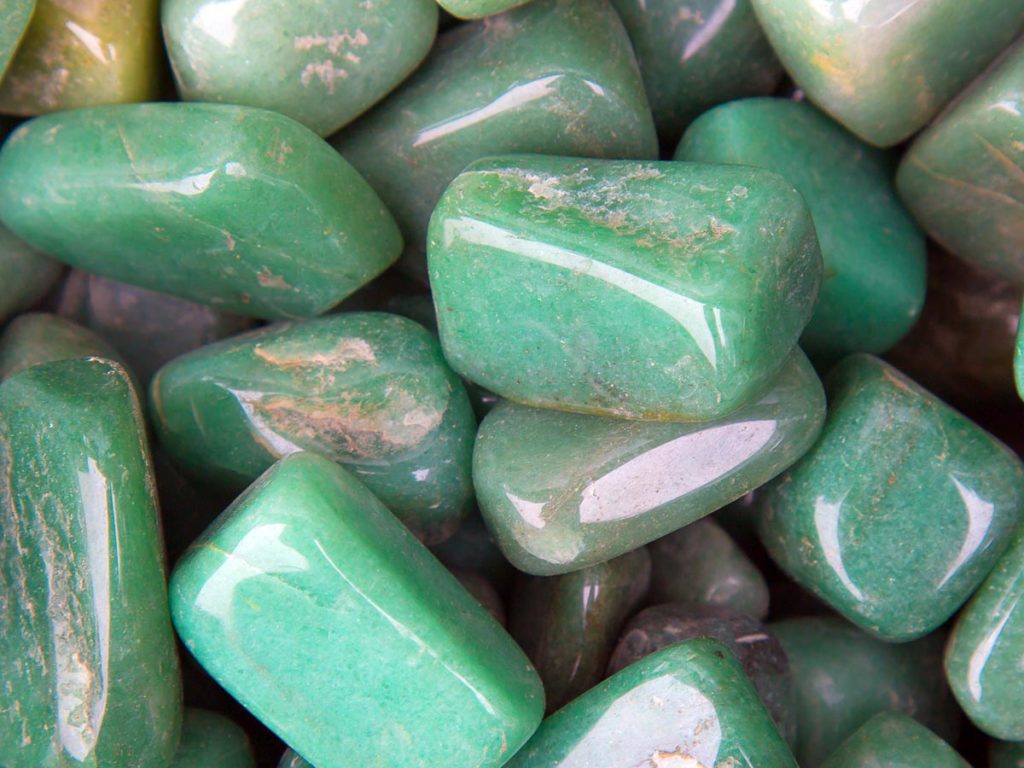
Jadeite
Image result for jadeite
Orthorhombic


6Aragonite
Andalusite 
Image result for aragonite
Trigonal


6Alunite
Abhurite 
Image result for abhurite
Hexagonal


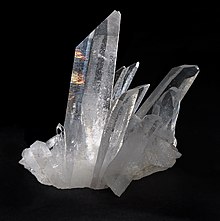
8Quartz
Agate 
Image result for Quartz
Cubic


6Lapiz Lazuli
Fluorite 
Image result for Lapis lazuli
Tetragonal


10Zircon
Apophyllite 
Image result for Apophyllite

Tuesday, May 14, 2019

Home Chemistry: What is that white powder?

Aim: To learn about the makeup of different white powders.

Image result for white powder in piles

There are a number of different white powders in our everyday life. Some of these are harmful and others are not. Test the four white powders listed to see which one has been found at the airport.

You will be given a small amount of 4 white powders on your cardboard. On the black cardboard using a magnifying glass look at the powders.
Look at them under your magnifying glass and record what you see. 

These are the four powders we will be using. Upload a photo of each powder. 

1.  Cornflour
2.  Baking Soda
3.  Salt
4.  Sugar 

Before you add the iodine, vinegar or water you will need to divide each powder into 3.

Materials

1.  Cardboard/Paper
2.  Magnifying Glass
3.  Pipette
4.  Sugar
5.  Salt
6.  Corn Flour
7. Baking Soda
8. Vinegar
9. Water
10.Iodine
Steps

1. Gather, paper, magnifying glass and Pipette. 
2. Split the paper into four sides. 
3. Then add some sugar, salt, cornflour and baking soda to each side.
4. Then using iodine add three drops to each one. - Examine closely what happens to use a magnifying glass for each one. 
5. Then using a pipette suck up some vinegar and add three drops to each one. 
6. Again using the pipette add three drops of water to each one and look closely on what happens. 


Findings:

Words to use: Absorbed, spread, frothed, fizzed, melted, blob,


Sugar
Salt
Baking Soda
Cornflour
Appearance
(White)
WhiteWhiteWhiteWhite
Grains
(small, medium large)
Large Large Medium Small 
Smell
(Strong, none)
NoneNone NoneStrong 
Iodine
AbsorbedSpread slowly Dried, looks like ear wax, solidDried onto the grain
Water
AbsorbedAbsorbed Dried Spread out on grain
Vinegar
AbsorbAbsorbFizz Up Rolled Off and Dried 

Write a conclusion about your findings. ( 4 plus sentences)
Use the Hexagon activity to give you some more ideas.

The sugar......
The Sugar is a white powder and has no smell. The grain is large and when
you add Iodine it absorbed it. When you added to water it absorbed it and when you add Vinegar it absorbed it. It also smelt very bad. 
The salt.....
The sugar is a white powder with no smell. The grains are quite large and if you add iodine it spread slowly and the colour disappeared lightly. If you add water it just absorbed it. When you add vinegar it slowly absorbed it. 
The Baking Soda......
The baking soda is a white powder and has no smell. It's grain's are medium sized. When you add iodine it dried up in and it looked it like ear wax. When you add water it dried. When you add vinegar it fizzed and dried after a few seconds. 
The cornflour.....
The cornflour is a white powder and has a strong smell. It has tiny grains. When you add iodine it dried into the grain. When you add water it spread out on the grain. Lastly, we added vinegar it rolled of the grain and dried. 


Do all the same experiments on the mystery white powder. What is it?

Baking Soda 

Home Chemistry: Crazy Crystals (Pt 1)

Aim: To learn about a saturated solution and how to make crystals
Definition of a solution
A liquid mixture, when something is dissolved into a liquid (eg: sugar in water) 

Definition of saturated
Having or holding as much as can be absorbed of something (when no more sugar or borax can be dissolved into the water)


In groups of three, you will make three different types of crystals and compare the results.


Image result for borax crystals

Ratio; 3 Tablespoons Borax per 1/2 cup water

Materials

1) Cup 
2) Borax 
3) Water 
4) Something to stir with (Etc, Stick or Spoon)
5) String 

Process

Step 1: Get a cup. 
Step 2: Pour in warm water. 
Step 3: Pour in the amount of borax needed.
Step 4: Mix until saturated ( or for around 10 mins)
Step 5: Get a peg, make a star out of pipe cleaners.
Step 6: Then hook it on the cup. 


Sugar Crystals

Grow your own Sugar Crystals

Ratio: 1 cup sugar to 1/2 cup water

Materials

1) Sugar 
2) Warm Water 
3) Stick
4) String 
5) Cup 

Process

Step 1: Get a cup.
Step 2: Pour in warm water.
Step 3: Pour in the amount of sugar.
Step 4: Mix until saturated ( or for around 10 mins)
Step 5: Get a stick 
Step 6: Tie the string into the stick and push the string down solution.


Image result for how to make salt crystals

Ratio: 4 Tablespoons salt to 1/2 cup water

Materials

1) Salt 
2) Cup 
3) String 
4) Stick 
5) Warm Water 

Process

Step 1: Get a cup.
Step 2: Pour in warm water.
Step 3: Pour in the amount of salt.
Step 4: Mix until saturated ( or for around 10 mins)
Step 5: Get a stick 
Step 6: Tie the string into the stick and push the string down solution.


Tuesday, May 7, 2019

Home Chemistry: Dirty Water Expierement

Aim: To make a filtration plant using household materials.

Image result for filtration science experiment
Water Filtration Plant

What is filtration?


Filtration is separating solids from liquids by adding a medium through which only the liquid can pass. 

Examples are:

  1.  Air Filtration 
  2.  Oil Filtration (Car)
  3.  Pool Filtration 
  4. Water Filtration 

Materials

1. Funnel 
2.Container
3. Filter
4. Pebbles
5. Dirty Water
6. Fine Sand 
7. Cup
8. Scissors

Process - ( use verbs or doing words in each step )


Step 1

Cut the bottle in half.

Step 2

Put the top half upside down on the bottom half, then put in filter paper. 

STEP 3

Add layers of fine sand and pebbles.

STEP 4

Get 1 cup of dirty water.

STEP 5

Pour the dirty water into the top half.

Findings

Write a short sentence about the water every 1 minute. 
Include 'How much water has filtered through', 'How fast it is dripping through', and 'How clear the water is'.


Minutes:                          1.                         2.                   3.                    4.                       5.
Drops per minute: 60 drops
Watercolour: Light Yellow
Conclusion: When we first started our didn't work because we poured the water ib too fast. So we had to start again but this time we put the sand and the pebbles in carefully especially the pebbles so the water doesn't go in the sides. We waited for a bit more but the water turned out to be quite yellow-ish. After that, we again grabbed some filter paper to make the water clearer. So we did it again and water was clear but still quite yellow-ish. Overall I really liked this experiment.

Friday, May 3, 2019

Home Chemistry: Things that fly....

FLIGHT

Aim: To learn about flight and aerodynamics. 

  • In your groups of 3, you will make a paper plane and measure its distance and behaviour.
  • In groups of 3, you will make a water rocket and record its distance and behaviour. 
Image result for flight forces

Definition: 
The action or process of flying through the air.
4 forces of flight:

  1.   Gravity 
  2.   Thrust
  3.   Drag
  4.   Lift

Paper Plane:

Material:

1. Piece if Paper
2. Ruler
3. Paper Clip

Steps:

1. Get some paper, and create a simple aeroplane.
2. Cut Flaps 
3. Fly the aeroplane
4. After put up the flaps and fly the aeroplane.
5. Lastly, put a paper clip on the tip and fly the plane.
Findings:


Plane Type
Distance
Behaviour
Normal
2.8mCurved

Ailerons
1.8mSwooped

Paper clip


4.5mStraight Line 

Conclusion:

In conclusion, the one with the paper clip went the furthest, because of that when the plane flew the weight of the paper clip help it fly. While with the normal plane it curved as it flew. In my opinion, I think that it happened because of gravity and how it was made. The last one was the plane with Ailerons, it was quite disappointing because when we saw the other planes their planes (with ailerons) flew up to 5m. But it was still a good experiment, even though the aileron swooped it went quite far.